Many home bakers underprice when they start. Ingredients are easy to count. Your time, packaging, utilities and payment fees are easier to overlook.
So let's do an honest costing, with a real example.
What a loaf actually costs
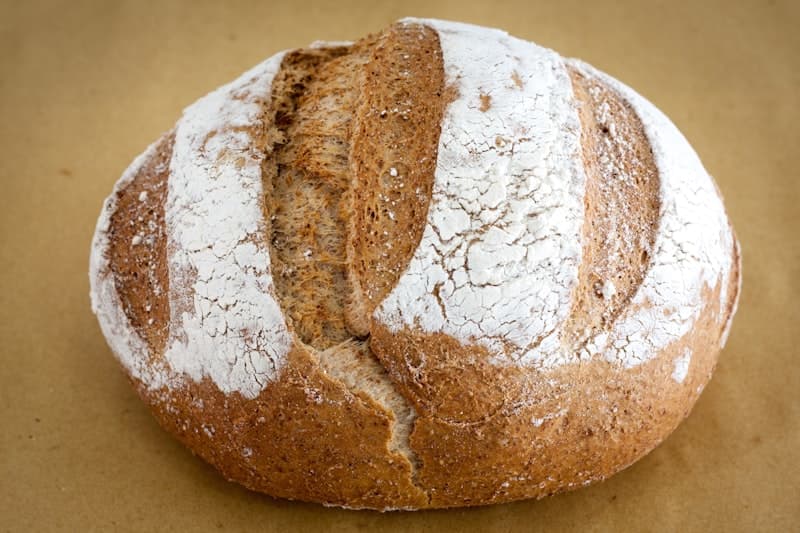
Take a seeded sourdough. The flour is obvious. Less obvious: the seeds (pricier than the flour, per loaf), the salt, the parchment, the bag it leaves in, the label on the bag, and the starter you feed all week whether you bake or not. When bakers do this exercise carefully, the number usually lands 20 to 40 percent above their first guess.
Say it comes to $2.85. Start by calculating the ingredient and packaging cost of one item, and write your own number down. Everything else sits on it.
A quick starting estimate
A rough shortcut from the small-food world: ingredients times three. One third covers ingredients, one third covers the rest of your costs (packaging, hydro, market fees, card fees, the odd burnt batch), one third is yours. Our $2.85 loaf lands at $8.55.
Treat that as a first estimate to sanity-check against, not a rule. The full calculation below is the one that matters.
The part everyone skips: your hours
Count the active time for a full batch. Mixing, shaping, scoring, baking in shifts, packing, standing at the pickup table. For 20 loaves, call it five real hours. Now decide what you want to earn per hour of active work. At $25 an hour, that's $125 across the batch, or another $6.25 per loaf.
Add it up and the honest price of that seeded sourdough is somewhere around $14 or $15. For comparison, look up what a bakery near you charges for naturally leavened bread.
Include transaction fees
Whoever processes the payment takes a cut. That's true at the farmers market with a card reader, and it's true online. Treat it like flour: a cost that lives inside the price, not a surprise that comes out of your third. (On OurCakewalk the service fee can go to the customer, get split, or sit with you — your choice in settings — while card processing comes out of your side like any card sale. Either way: price for it.)
The sell-out clock
Once you're running drops, one signal replaces most of this spreadsheet work: how fast you sell out.
Gone in three minutes? You're underpriced, probably by a lot. Nudge up 10 or 15 percent next drop. Selling out comfortably over a few hours is roughly right. Not selling out for two drops in a row means the price is high for your current audience size, or the audience needs growing before the price does.
If you can raise prices without materially affecting demand, you may have been underpricing. Make small changes, watch what happens, and adjust from there.